The Rise of AI Agents: How LLMs Are Becoming Autonomous
Language models are moving from single-shot chat responses to systems that plan, call tools, and take multi-step action on their own. Here's what's actually changed under the hood.
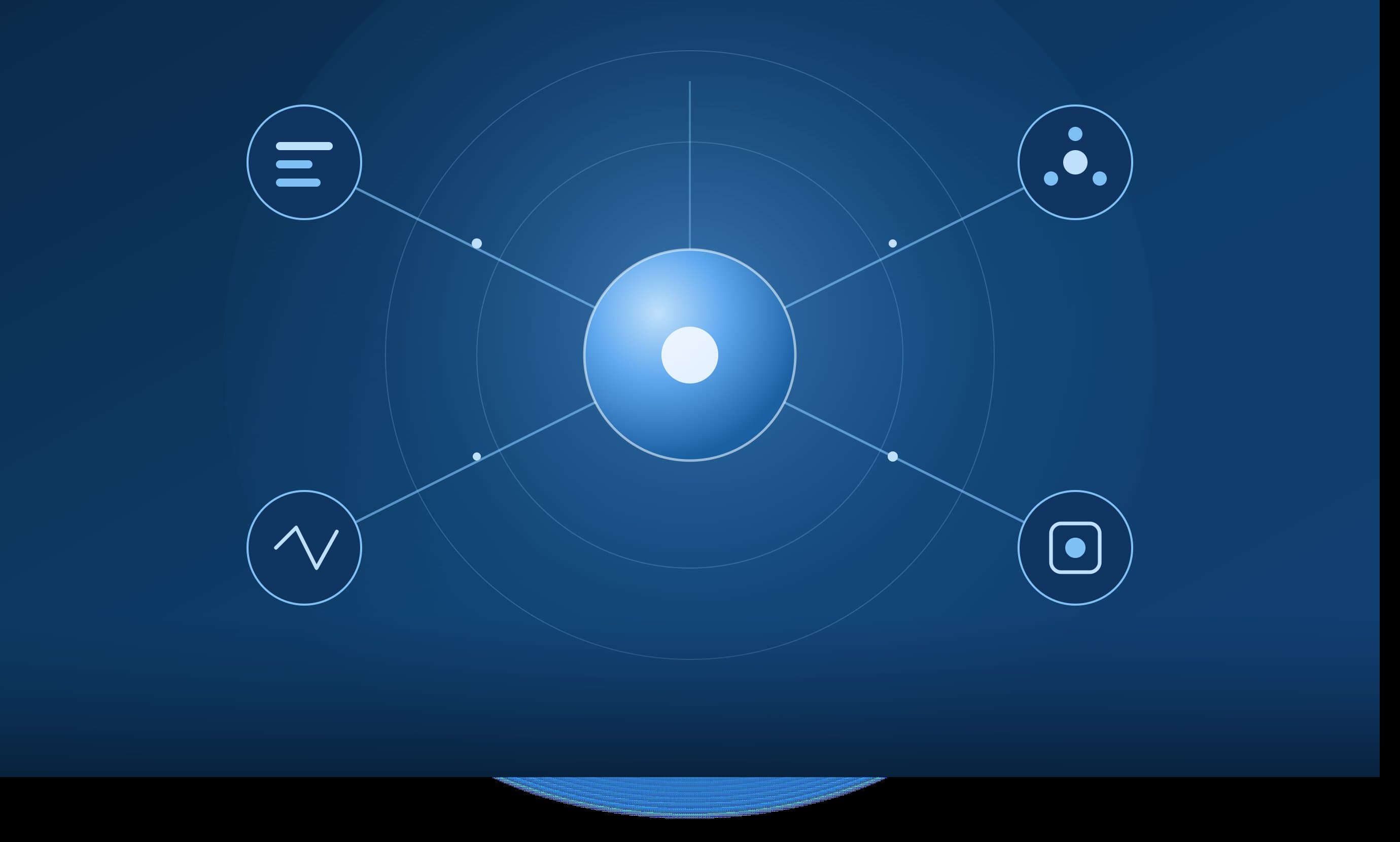
A year or two ago, most interaction with an LLM looked the same for everyone: type a prompt, read a response, repeat. That loop is still useful, but it's no longer the interesting part. The interesting part is what happens when the loop closes itself — when a model is given a goal, a set of tools, and permission to decide what to do next without a human typing the next instruction.
From completion to action
A classic LLM call is a function: text in, text out. An agent wraps that function in a loop. At each step, the model reasons about the current state, chooses an action — call an API, run code, query a database, click a button in a browser — observes the result, and decides whether it's done or needs another step. The model itself hasn't fundamentally changed; what changed is the scaffolding around it: structured tool-calling, memory of prior steps, and a stopping condition instead of a fixed number of turns.
Perceive the current state (a task, a page, a ticket, a codebase)
Reason and plan the next action
Act — call a tool, run code, or take a UI action
Observe the result and loop, or stop
Agents you can already use today
This isn't a future-tense idea anymore — it's shipping across the industry in different shapes, each optimized for a different environment.
| Agent | Maker | Environment it acts in | What it automates |
|---|---|---|---|
| Operator | OpenAI | Web browser | Fills forms, books, and completes multi-step web tasks |
| Claude (agentic / computer use) | Anthropic | Terminal, desktop, browser | Writes and ships code, runs commands, operates a computer |
| Copilot (Microsoft 365 agents) | Microsoft | Office apps, enterprise data | Drafts documents, schedules meetings, summarizes threads |
| GitHub Copilot / coding agents | GitHub | Codebase & CI | Turns an issue into a pull request end to end |
| Support agents (e.g. Intercom Fin, Sierra) | Various vendors | Customer support tooling | Resolves tickets autonomously without a human reply |
A sample of agent products in production use as of 2026 — not an exhaustive list.
Why this is harder than it sounds
The demos make it look effortless, but three problems show up almost immediately once you try to build one yourself. First, error compounding — a wrong assumption in step two quietly poisons steps three through ten, and the model is often confidently wrong about it. Second, tool selection is a genuine reasoning problem, not a lookup: giving a model twenty tools and hoping it picks the right one at the right time is closer to system design than prompt design. Third, cost and latency stack linearly with steps, so an agent that "just keeps trying" can burn a lot of time and money before it fails safely.
The practical fixes that tend to work are boring, not clever: constrain the action space tightly instead of exposing every tool everywhere, force the model to state its plan before acting so mistakes are visible before they're executed, and add a hard step budget with a graceful fallback rather than an infinite retry loop.
Where autonomy earns its complexity
The autonomous-agent narrative gets applied to everything, but the cases where it earns its complexity are narrower: long-horizon tasks with clear success criteria — fix this failing test, triage this ticket queue, reconcile this spreadsheet — where a human checking every intermediate step would defeat the point of automating it. In enterprise workflows especially, the value shows up in the boring, repetitive middle of a process, not in flashy one-shot demos.
What's next
Three trends look likely to define the next couple of years. Multi-agent systems, where specialized agents hand tasks to each other rather than one model doing everything, are moving from research demos into production pipelines. Standardized tool-and-context protocols (the kind that let any agent talk to any tool without custom glue code) are turning "agent building" from bespoke engineering into something closer to plugging in a peripheral. And as agents get access to real systems — codebases, inboxes, payment flows — the guardrails around them (permissions, audit trails, human checkpoints) are becoming as important a design problem as the reasoning loop itself.
Key takeaways
- An agent is an LLM call wrapped in a loop: reason, act, observe, repeat — the model didn't change, the scaffolding around it did.
- Real products already ship this today across very different environments: browsers (Operator), terminals and desktops (Claude), office suites (Copilot), codebases (GitHub coding agents), and support queues.
- The hard parts are compounding errors, tool selection, and runaway cost — not the reasoning itself.
- The best use cases are long-horizon, clearly-scored tasks, with a human checkpoint before anything consequential happens.